
The Montessori Method
More than a century ago, Dr. Maria Montessori observed something radical: children teach themselves — when adults prepare the right environment and then get out of the way.
What you'll notice in a Montessori classroom
The Prepared Environment
Child-sized furniture, open shelves, natural materials, and order everywhere. Everything within reach says: this world is yours.
Child-Led Learning
Children choose their work and repeat it until it's mastered. The teacher observes, guides, and presents the next lesson at just the right moment.
Mixed-Age Classrooms
Three-year age spans mirror real life. Younger children absorb from older ones; older children lead, mentor, and share what they learned.
Hands-On Materials
The pink tower, golden beads, sandpaper letters — beautiful, self-correcting materials that turn abstract ideas into things a hand can hold.
Five areas, one connected world
Every classroom at A Little World is organized around the five classic areas of Montessori learning.
1 · Practical Life
Pouring, buttoning, sweeping, food preparation, care of plants and animals. These "real work" activities build concentration, coordination, and the deep satisfaction of contributing.
2 · Sensorial
Materials that isolate size, shape, color, sound, texture, and weight. Children literally sharpen their senses — the foundation for math and scientific thinking.
3 · Language
From rich conversation, storytelling, and Spanish lessons to sandpaper letters and the moveable alphabet — writing and reading emerge naturally, joyfully, and often early.
4 · Mathematics
Number rods, spindle boxes, golden beads. Children hold quantities in their hands before they ever see a worksheet — so math makes sense from the start.
5 · Culture & Science
Geography, history, botany, zoology, art, and music. Puzzle maps and world celebrations help children find their place in a big, beautiful world.
+ Enrichment
Music, instruments, creative movement, and child-friendly yoga round out every week — because growing minds live in growing bodies.
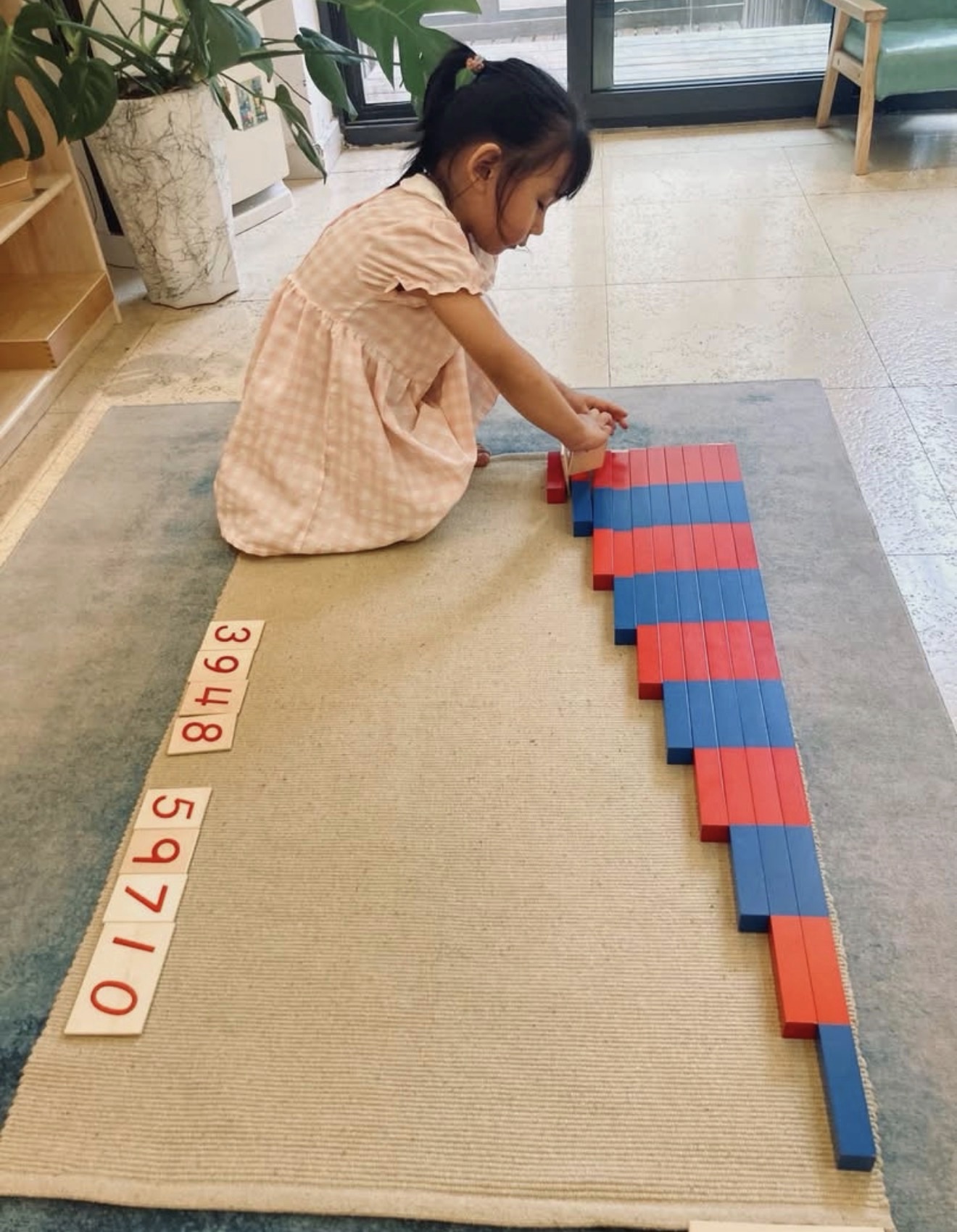
This photo wasn't staged. It's Tuesday.
That's one of our own students with the red and blue number rods laid out one to ten, numeral cards matched by hand — quantity she can see, hold, and compare. No one assigned this work. She chose it, and she'll return to it until her hands are sure.
Self-correcting materials mean the child discovers errors without an adult pointing them out. Confidence at this age isn't taught — it's constructed, one careful placement at a time.
"The greatest sign of success for a teacher is to be able to say: the children are now working as if I did not exist."
— Dr. Maria Montessori
Why parents see the difference at home
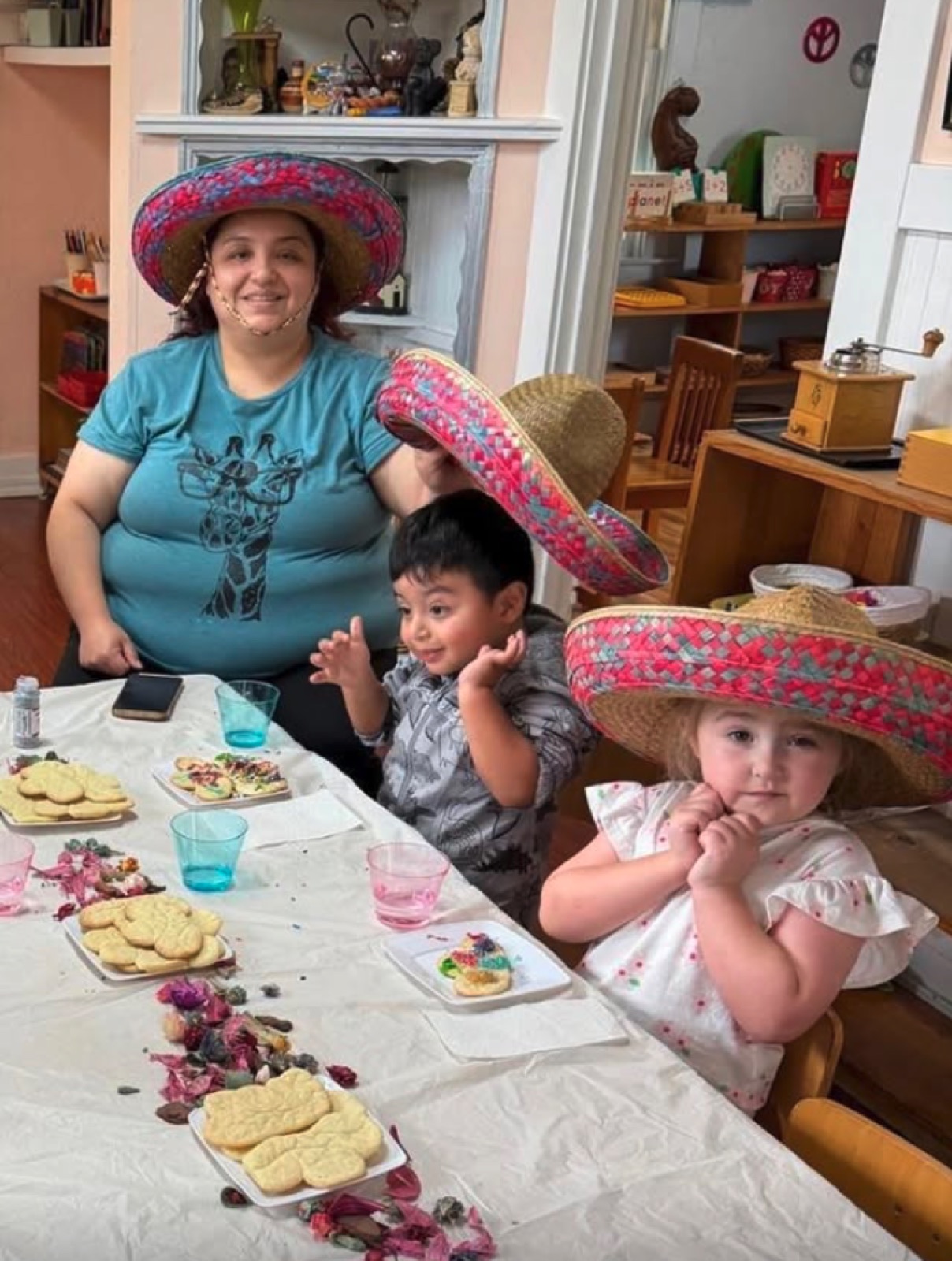
Montessori children set the table, dress themselves, and finish what they start — not because they're told to, but because independence has become who they are.
- Concentration — long, uninterrupted work periods build attention spans that last a lifetime.
- Intrinsic motivation — no gold stars needed; mastery is its own reward.
- Grace & courtesy — daily lessons in kindness, patience, and respect for others.
- School readiness — our graduates enter kindergarten and first grade ahead, and stay curious.